Dubai · UAE · Wedding Ceremony Planning
How to Plan an Excellent Wedding Ceremony: Complete Checklist
An excellent wedding ceremony feels personal, clear and emotionally present.
Guests understand what is happening, the couple can participate without being rushed,
and every important person, ritual and practical responsibility has a place in the plan.
Excellence does not require the largest venue or the longest programme.
It comes from aligning meaning, legal or religious requirements, guest comfort,
timing, sound, photography, film and privacy around the couple’s real priorities.
- Meaning Before Decoration
- Clear Ceremony Order
- Guest Comfort
- Realistic Timeline
- Photo + Film Planning
- Privacy and Cultural Respect
The Direct Answer
What Makes a Wedding Ceremony Excellent?
A Clear Purpose
The ceremony should express the couple’s commitment, values and family or cultural context rather than feeling like a collection of disconnected trends.
A Structure People Can Follow
The officiant, planner, couple, wedding party and production team should know the order, cues and responsibilities.
Realistic Timing
The schedule should allow entrances, vows, rituals, family greetings and transitions to happen without rushing or long unexplained gaps.
Comfortable Guests
Access, seating, visibility, sound, temperature, shade, hydration and clear directions affect how present guests can be.
Respectful Documentation
Photography and film should preserve the ceremony without blocking guests, interrupting sacred moments or repeatedly directing the couple.
A Practical Backup Plan
Weather, illness, transport, technical problems and delayed arrivals need calm alternatives rather than last-minute improvisation.
If every minute is controlled only for décor, guests or cameras, the meaning can disappear.
Start with Priorities
Agree on the Non-Negotiables Before Booking Details
Legal or Religious Validity
Confirm the required officiant, documents, witnesses, wording, location and official steps with the relevant authority or religious leader.
Cultural and Family Traditions
Identify rituals, elders, blessings, entrances, gender-separated areas and customs that must be protected in the schedule.
Guest Experience
Decide how formal, intimate, interactive, multilingual or accessible the ceremony should be.
Privacy and Publication
Clarify whether preparation, women-only spaces, children, guests, vows or the full ceremony may be recorded or published.
Photography and Film Priorities
Choose the important people, moments, audio, portrait time and deliverables before setting the final production scope.
Budget and Responsibility
Assign who controls contracts, payments, approvals, family decisions and wedding-day schedule changes.
Build the Ceremony in the Correct Order
A Flexible Wedding Ceremony Outline
Ceremony order varies by legal, religious, cultural and personal requirements.
Use this as a planning framework, then confirm the final sequence with the officiant.
| Stage | Purpose | Planning Questions |
|---|---|---|
| Guest Arrival and Prelude | Seats guests, establishes atmosphere and communicates practical instructions. | Who welcomes guests? Is seating assigned? Is the sound level appropriate? |
| Processional or Entrance | Begins the ceremony and brings key people into position. | What is the order? Which doors, aisle and music cues are used? |
| Welcome and Opening | Explains why everyone has gathered and sets the tone. | Does it need translation, religious wording or venue instructions? |
| Readings, Prayers or Cultural Rituals | Adds family, spiritual or personal meaning. | Who participates? What objects, microphones or permissions are needed? |
| Declaration and Vows | Expresses the couple’s commitment and may include required wording. | Are vows personal, repeated or officiant-led? Will they be amplified? |
| Ring or Symbolic Exchange | Marks the commitment through rings or another cultural symbol. | Who holds the items? Are there children or family members involved? |
| Pronouncement and Kiss | Completes the ceremony and creates a clear celebratory transition. | What wording is permitted? Where will the officiant stand for the photograph? |
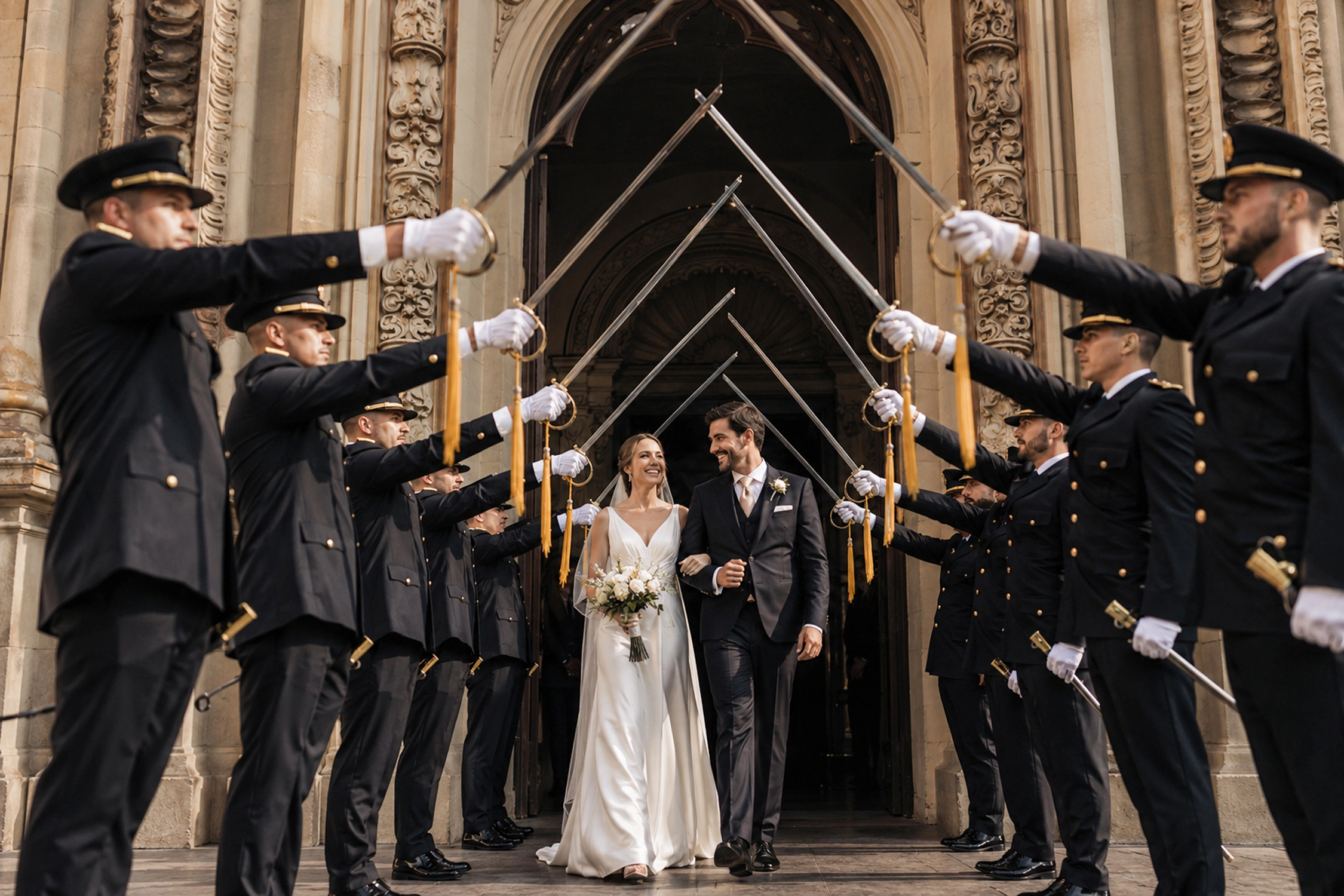
| Recessional or Exit | Allows the couple and wedding party to leave in an organised sequence. | What is the exit order, music, guest participation and next destination? |
The officiant and relevant authority determine the required elements for a legally or religiously valid ceremony.









The Ceremony Needs the Right Setting
Venue, Layout and Guest Flow Shape the Experience
A venue should support the ceremony order, guest comfort,
cultural requirements, sound, photography and movement—not only the decoration.
Visibility and Seating
Guests should see the couple, officiant and rituals without camera stands, columns, décor or service routes blocking the view.
Entrance and Exit Routes
The wedding party, family, couple, photographers and venue team need separate or coordinated paths where possible.
Weather and Backup
An outdoor ceremony needs a complete alternative space, decision deadline and communication plan.
A Practical Planning Timeline
When to Confirm the Main Ceremony Decisions
Early Planning
Set priorities, budget, guest-count range, date options, venue type, ceremony format and key privacy or cultural requirements.
After Venue and Main Vendors
Confirm officiant, planner, photography, film, music, attire direction, guest logistics and any permit responsibility.
Several Months Before
Develop the ceremony order, family roles, readings, vows, music cues, translations, accessibility and weather plan.
Final Month
Complete the run sheet, final guest count, seating, family photo list, vendor contacts, documents and equipment requirements.
Final Week
Distribute the approved timeline, confirm weather decisions, rehearse key movements and resolve all remaining names and pronunciations.
Wedding Day
One authorised coordinator should manage changes so the couple, family and vendors do not receive conflicting instructions.
Adapt it to the real time available, cultural structure, guest count and planning support.
Guest Comfort Is Part of Ceremony Quality
Plan What Guests Will See, Hear and Experience
Arrival Information
Share entry, parking, valet, transport, dress expectations, start time and accessibility clearly before the event.
Seating and Family Priorities
Reserve suitable places for parents, elders, children, guests with mobility needs and anyone participating in the ceremony.
Sound and Translation
Guests should understand the vows, readings and announcements. Test microphones and provide interpretation where appropriate.
Climate and Waiting Time
Shade, temperature, water, shelter and realistic waiting periods are essential for outdoor or destination ceremonies.
Phones and Social Sharing
Decide whether the ceremony is unplugged, selectively shareable or private, then communicate the policy respectfully.
Transition After the Ceremony
Tell guests where to go next while the couple completes greetings, formal photographs or a private pause.
Attire, Music and Personal Details
Support the Ceremony Instead of Competing with It
Wedding Gown and Groom Outfit
Attire should fit, move, breathe and work with the venue, climate, cultural expectations and full wedding timeline.
Music and Entertainment
Choose exact ceremony cues, test sound, confirm performer access and keep the emotional focus on the commitment.
Stationery and Guest Details
Programmes, favor cards and signage should be readable, useful and coordinated without exposing private information.
Rehearsal and Responsibility
A Rehearsal Is a Logistics Check, Not a Performance
The goal is to make the movement and cues familiar enough that people can be emotionally present during the real ceremony.
Practise Entrances and Exits
Confirm the order, spacing, pace, doors, aisle, standing positions and the destination after the recessional.
Test Names and Pronunciation
The officiant and MC should confirm names, titles, cultural terms and any multilingual wording.
Confirm Objects and Documents
Assign rings, symbolic items, readings, legal documents, pens and ceremonial materials to specific people.
Review Sound Cues
Test microphones, music starts and stops, readings and any live or recorded performance.
Show Camera Positions
The officiant, planner and venue should know where photographers and videographers may stand and move.
Name the Decision Maker
One planner, coordinator or authorised family representative should approve wedding-day changes.
Photography and Videography
Plan the Memories Without Staging the Entire Ceremony
Share the Ceremony Order
The team should know entrances, rituals, ring exchange, signing, first kiss, recessional and any surprise events.
Identify Important People
Parents, grandparents, children, officiants and key family members should be identified before the ceremony begins.
Protect Clean Audio
Vows, prayers, readings and speeches need microphone and recorder planning when they are part of the final film.
Agree on Movement Rules
Some ceremonies allow camera movement; others require fixed positions or prohibit access to sacred areas.
Reserve Portrait Time
Family and couple photographs need realistic time after or before the ceremony without leaving guests uncertain.
Confirm Privacy
Recording, online galleries, portfolio use and social publication should follow the written permission of the couple.
Cultural and Private Celebrations
The Ceremony Plan Must Reflect the Actual Family Structure
Female Team Options
Female photographers and videographers can be requested for preparation, women-only spaces or private ceremonies according to availability.
Separate Halls or Parallel Events
Simultaneous moments require enough team members, clear priorities and separate communication routes.
Religious and Cultural Boundaries
Camera positions, attire, physical contact, music, publication and ceremony interruption should follow the family’s requirements.
Multilingual Ceremonies
Translations, printed programmes and repeated explanations can help guests understand without making the ceremony unnecessarily long.
Children and Vulnerable Guests
Obtain appropriate permission and avoid building the ceremony around unpredictable performance by children.
Restricted Publication
Private gallery delivery and written limits on website or social use can be included in the agreement.
Dubai Event Planning
Ask the Venue or Organiser Which Approvals Apply
Permit responsibility depends on the type of event, venue, entertainment,
activities and current Dubai requirements.
Event Permit Review
Dubai DET states that venues and organisers arranging relevant entertainment, sport, charity, religious or business events use the e-Permit process.
Private-Activity Notification
Dubai also provides a separate notification route for qualifying private activities hosted by venues.
Venue and Performer Details
The responsible organiser should confirm venue approval, event activities and any performer documentation before the ceremony.
The venue or organiser should verify the current requirement directly with the relevant authority. This page is not legal advice.
Verified Production Experience
What a Two-Day Burj Al Arab Wedding Teaches About Ceremony Planning
A verified two-day wedding production at Burj Al Arab involved approximately 250 guests,
two photographers, five videographers and a twelve-person total team.
Approximately 2,500 files were captured. The photographic delivery included approximately
500 final photographs, with 200 selected images receiving professional retouching.
Album and personal-use delivery were part of the wider project.
The available record does not identify the event year, religious format, private ceremony order or entertainment programme.
Those details are not invented in this article.
The production lesson is operational: several people, spaces, cultural moments,
audio sources, guest movements and media responsibilities require one shared timeline.
A large team without role assignment can duplicate one moment while missing another.
Common Planning Errors
What Often Prevents a Ceremony from Feeling Excellent?
Planning Decoration Before Structure
Visual design cannot solve poor seating, unclear entrances, weak sound or unrealistic timing.
Making the Ceremony Too Long
Extra readings and rituals should have meaning. Repetition without purpose can reduce attention and emotional impact.
No Clear Decision Maker
Conflicting instructions from several family members create delays and stress for the couple and vendors.
Ignoring the Guest Transition
Guests need to know where to go while the couple signs documents, greets family or completes portraits.
Leaving Audio to the Last Minute
Unclear vows and readings affect both guest experience and the final wedding film.
Over-Scripting Candid Moments
A ceremony should not pause repeatedly for recreated reactions or camera directions.
Final Ceremony Checklist
Confirm These Details Before the Wedding Day
- Legal, religious and officiant requirements
- Final ceremony order and exact timing
- Names, pronunciation, readings, vows and translations
- Wedding party entrance, standing positions and exit order
- Rings, documents, pens and symbolic objects
- Venue access, seating, visibility and accessibility
- Weather backup and the person authorised to activate it
- Music files, musicians, microphones and soundcheck
- Family, cultural and women-only requirements
- Photography positions and priority people
- Video audio sources and recording restrictions
- Post-ceremony guest movement and family photo plan
- Venue or organiser permit responsibilities
- Emergency contacts and one final decision maker
Research Sources
References Used for This Wedding Ceremony Guide
- The Knot: Wedding Planning Checklist — adaptable planning timeline, final meetings, RSVPs, vendor coordination and photography priorities.
- The Knot: Wedding Ceremony Order — flexible ceremony structures across secular, religious and cultural traditions.
- Adobe: Wedding Photography Planning — timeline review, ceremony overview and priority shot-list preparation.
- Dubai DET: Event Permit — current e-Permit route for relevant organised events.
- Dubai DET: Private Activity Approval — separate venue notification route for qualifying private activities.
Related Planning Guides
Continue Building the Wedding Ceremony
Frequently Asked Questions
Excellent Wedding Ceremony FAQ
What are the essentials of an excellent wedding ceremony?
Clear meaning, a valid and understandable ceremony order, realistic timing, guest comfort, suitable sound, respectful documentation and a credible backup plan.
What is the normal order of a wedding ceremony?
A common outline includes guest arrival, processional, welcome, readings or rituals, vows, symbolic exchange, pronouncement and recessional. The final order depends on the officiant and tradition.
How long should a wedding ceremony be?
There is no universal ideal. It should be long enough to complete the required and meaningful elements without repetition or unnecessary waiting.
Do we need a wedding rehearsal?
A rehearsal is especially useful when several people, entrances, rituals, children, live music or complex venue movements are involved.
What should the photographer know before the ceremony?
Share the final order, important people, cultural restrictions, camera positions, ring exchange, signing, first kiss, recessional and family photo priorities.
What does the videographer need for the ceremony?
The film team needs the timeline, camera permissions, microphone access, vows and readings, music cues, privacy requirements and enough setup time.
Can a private ceremony remain unpublished?
Yes. Website, portfolio and social-media permissions can be limited or excluded in the written photography and film agreement.
Does every Dubai wedding need the same event permit?
No. The venue or organiser should verify which permit, notification or approval applies to the exact event, activities and entertainment programme.
Dubai · Abu Dhabi · UAE · Destination Weddings
Request Your Wedding Photography Proposal
Share the date, venue, guest count, ceremony structure,
cultural requirements, important people, photo and film deliverables, and privacy preferences.